
Thoughts on design, 2026 edition
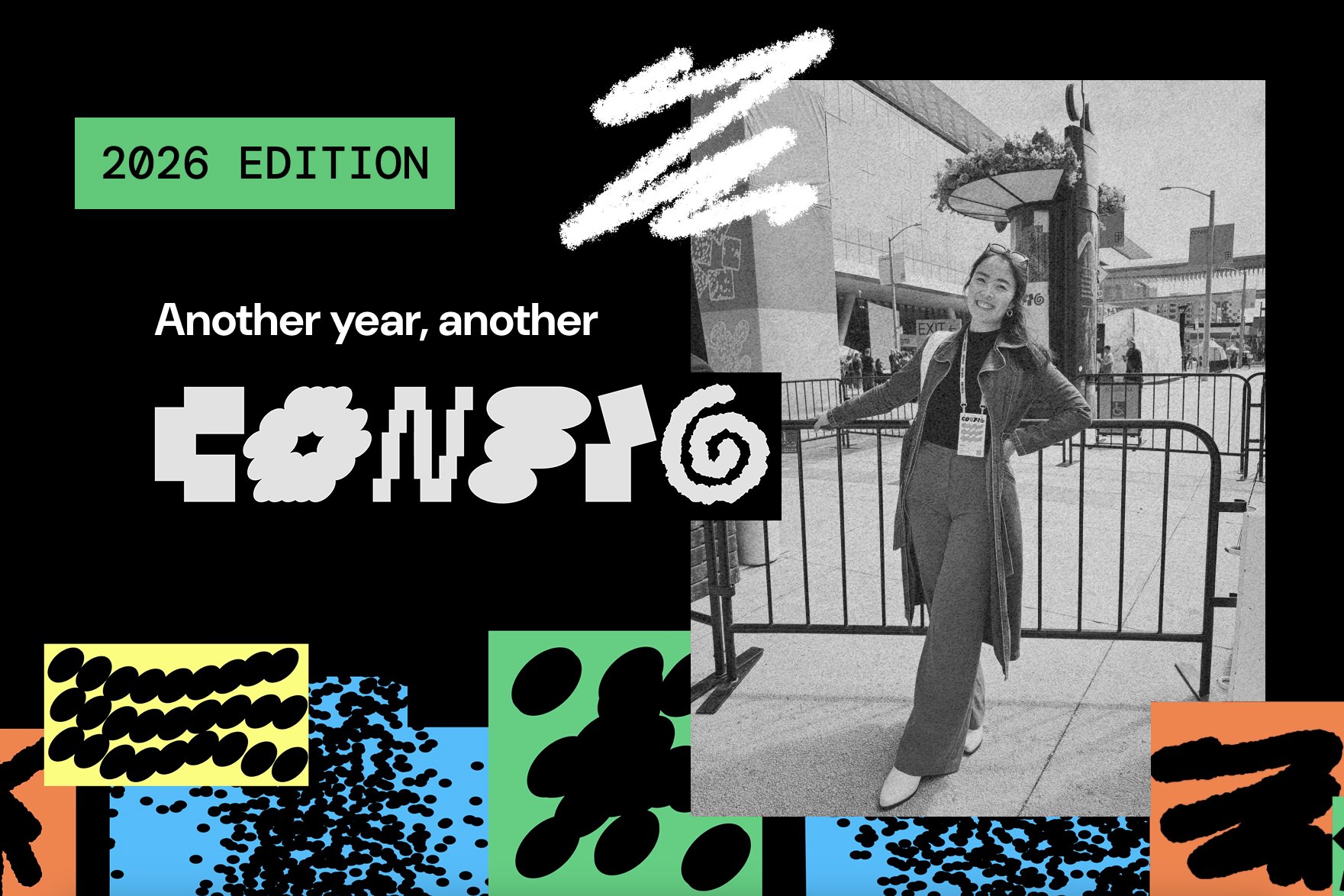
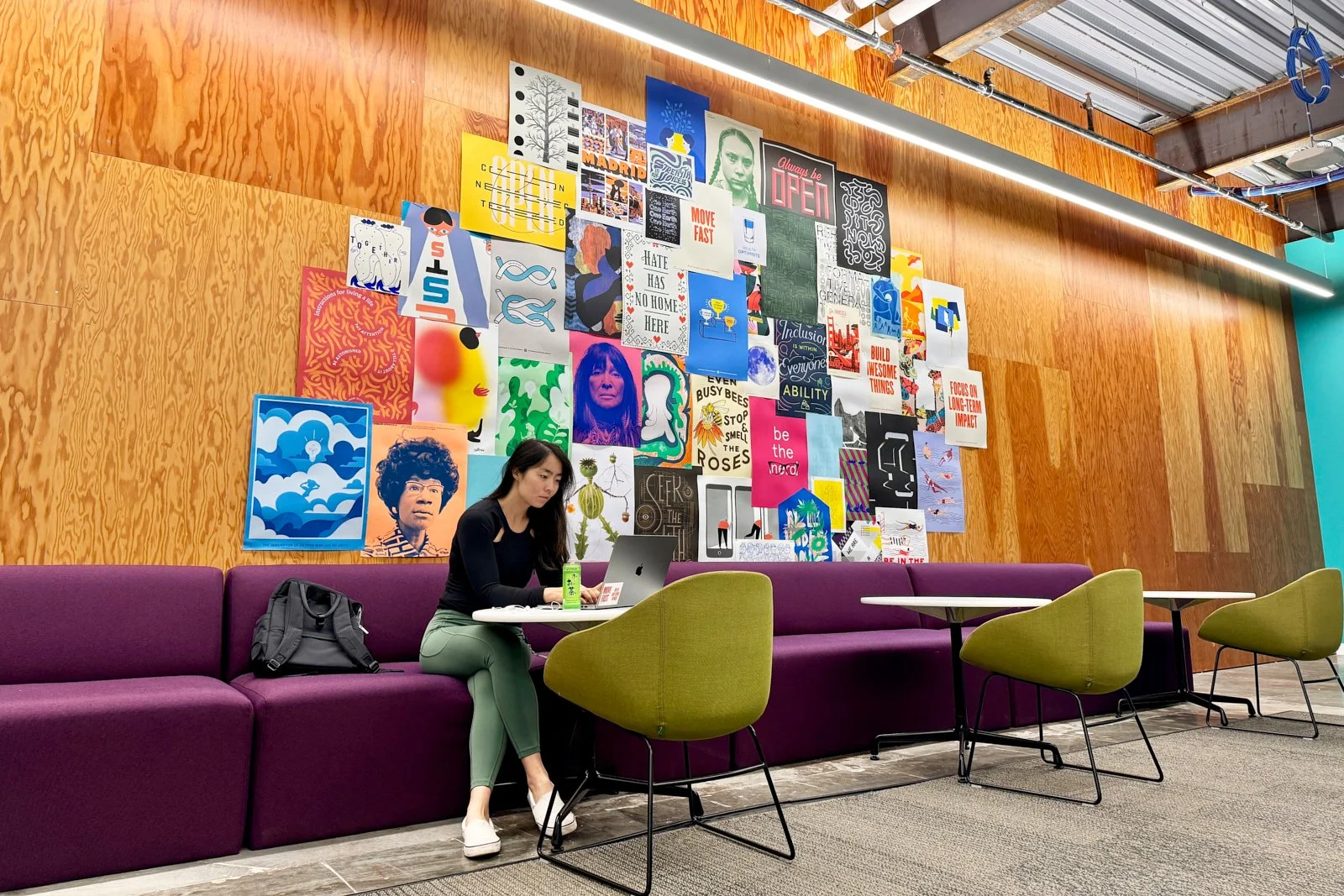
Last week, I gathered with thousands of designers and design enthusiasts in downtown San Francisco, armed with yellow tote bags, Figma sweatshirts, and a desire to find our spark again after feeling burnt out by AI and the existential questions it poses around the future of our field. I walked into Moscone Center looking for optimism and inspiration, and came out with a newfound energy and admiration for the craft and experimentation seen in the work shared.
Here are some sessions I found particularly interesting from the 2026 Figma Config conference.
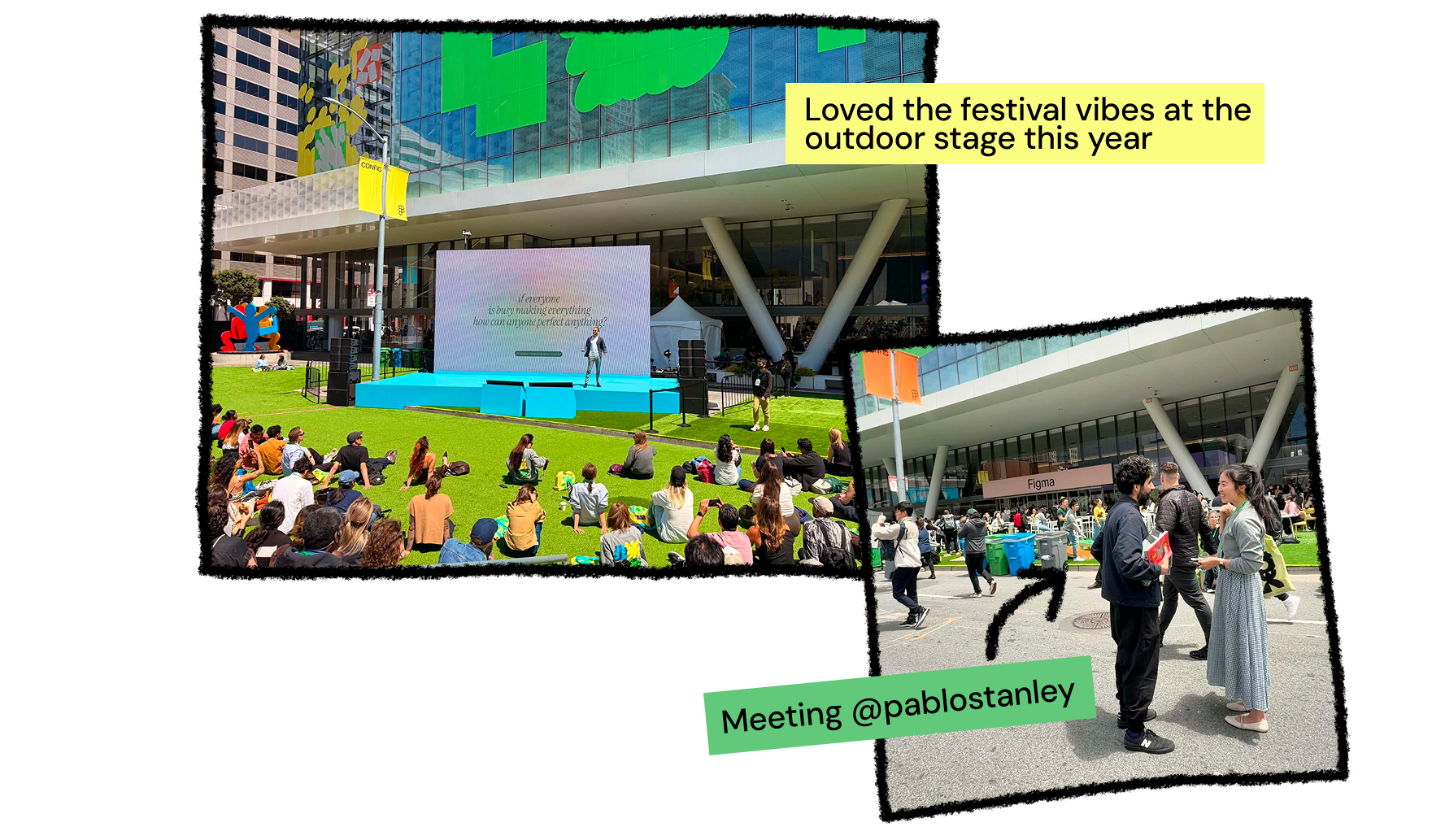
Okay let me fangirl for a minute. Pablo Stanley is one of my biggest design idols in the field. A prolific maker and builder, his work is innovative, fun, generous, and deeply human. The instant I saw him on the street, a quiet panic took over and I found myself silently rehearsing everything I wanted to say. I approached him and unleashed a torrent of words, and he was every bit as kind and humble in person — exactly what I expected.
Making AI work
Meta’s Figma design system MCP
A problem we’re all familiar with is how vibecoding doesn’t produce results that adhere to an existing design system, caused by low fidelity, low predictability, and context collapse at high complexity. Instead of letting it ship slop, Meta product designer Harvey Whiting (a new friend) set out to solve the quality problem by rebuilding all components with strict guidelines, all captured inside a Figma Make template.
He developed an MCP and partnered with Figma to integrate it into Make. By layering context foundations, skills, and design agents, designers are now empowered to use AI to generate production-ready designs.
Teach your AI to know you
The Head of Design at Atlassian shares the tactical methods she uses to train her AI to externalize her thoughts, writing style, and tidbits from everyday life. By bridging the physical and digital, she builds not just a personal graph, but a team graph that can function as a real team collaborator. Her actionable tips:
Build your own context by recording yourself and verbalizing your thinking. Ask AI to take the transcript, digest it, make sense of it, and convert it into a document, then extract meaningful ways of thinking into a thinking.md file. Over time, this collection compounds. AI can make sense of all this information and structure it into chapters, topics, titles, etc
Train your AI to write as you, using sent emails, work messages, meeting transcripts, and old blog posts as training data. For example, prompt it to “Match my voice, sentence rhythm, vocabulary. No corporate filler.”
Take a photo of anything to ask AI to identify, log, and parse it for any ongoing projects you have at work or in personal life.
How to build AI robots for senior citizens
Norbert Health builds robots for seniors in nursing homes (honestly such a fitting use case for AI). AI is leaving the browser and entering human environments. With the percentage of senior citizens rising, the ratio of nurses to nursing home patients is dwindling. However, just placing a robot into a senior care facility isn’t enough; the robots need to be trusted and accepted by the patients first. Norbert Health’s Head of Product and Design talks about how they introduced a friendly face to build familiarity, clarity, and warmth, and in the end, developed not a design system, but a human system, to build relationships in physical AI.
A human system for a robot includes recognition of patients, perception of moments that can turn into conversation, facial expressions and gestures to create emotional connection, and continuity to create long-term relationships. In the world of AI, it’s easy to optimize for speed and acceleration. But for senior home patients to allow AI into their doors, there must be a human system that gives the tech meaning. In order for humans to adapt to it, we need to focus on connection.
A critique of software
Luis Ouriach, Designer Advocate at Figma, critiques UI design over time and showcases how software design has become hyper-optimized, design system-compliant, and as a result, soulless. And in the AI era, talking to a chatbox won’t result in better design outputs.
As artists and creatives, we need to use brand and feeling as a differentiator to not risk making software that all look the same. Now that designers can also build, we should keep playing and taking risks to add more intention and brand into our work and create something that actually makes people feel something.
Case study walkthroughs
An agency rebrands NASA.gov
Designers from an agency tell the story of how they overhauled an outdated web experience full of complicated layouts, inconsistent navigation, and messy CMS systems created by NASA’s many decentralized departments.
With a target audience of everyone on the planet, they conducted extensive research and created behavior-driven variations of user personas, ranging from the pragmatist to the dreamer.
NASA has an existing visual brand system with a legacy that’s emotional, cultural, scientific, and woven into how generations of people see discovery, progress, and possibility. This website refresh had to honor that by capturing the spirit of exploration.
This was one of my favorite talks not just because I love NASA, but because the designers showed all their work — mood board references, research personas, Sharpie sketches, low-fidelity designs, the final result and how it’s held up over time. Low-fi design is not dead!
Vicki Tan writes a book
Without prior experience, designer and first-time author Vicki Tan walks through how she wrote and created a book about answering life’s big questions and changing behavior through the lens of cognitive bias. Through design iterations and the accumulation of new skills in writing and drawing, she tells her story through a framework for turning creative energy into something tangible. In four parts, the journey starts with following curiosity, using what you have, letting it transform you, and then beginning again.
Waymo’s communication design
Waymo goes about its mission not to create a cool tech novelty, but to address a public health crisis caused by America’s road deaths. Although their autonomous vehicles have shown a 92% reduction in serious injury crashes, for riders, trust is not earned statistically, but emotionally.
To reach mainstream adoption, the head of design at Waymo talks about the shift where they had to stop designing to educate and impress, and start designing to build trust. They curated the passenger UI to show what the car sees in a visually informative way that didn’t overwhelm riders. They invested in sound design and anchored the vehicle’s musical soundscape to a musical key that is associated with feelings of joy and clarity. They invented a design language to communicate human signals using motion and a lidar screen display.
As a Waymo early adopter who participated in the trusted tester program, I remember the excitement and fear going into my first ride, and the sense of reassurance and newfound trust in technology I developed by the time I stepped out of the car. By the time I took my second ride, I was so comfortable I actually fell asleep. Waymo is the perfect example of the “good design is invisible” philosophy.
Grammy Award-winning art director talks about the end-to-end design process
Brent David Freaney, who designed Charli XCX’s iconic BRAT album artwork, tells how his upbringing shaped his cultural taste, and the literal design process (messy Figma files and all) behind the visual design of BRAT. I especially loved what he said here:
“As a designer, our real work is not in the actual design itself, but in the collecting of ideas and design, and being able to be inspired and see other things and to take it into your brain […] The work is not spending time on the computer doing the thing […] The work is in experiencing and trying to take it all in and consuming […] to the craziest degree.”
Throughout his talk, he showcases his rounds of explorations, highlighting their importance. He reminds us that the path isn’t always linear, and sometimes you have to go the wrong way and define what you don’t want the finished result to be.
Once a piece of work is published, the audience’s response to the design is the final step in the design process itself. The audience is the medium. Creating art is the act of trying to get people to react to something viscerally. In this way, design can live on forever in its impact.
Freelance careers
Zach Lieberman, new media artist and designer
Zach Lieberman walks through his collection of innovative work created over the course of a decade, during which he made and posted a sketch or animation every single day. With daily feedback and comments on his work, he learns how his ideas are in or out of harmony with the world. The public response goes to show the power of making and sharing work often.
He also talks about following curiosity, practicing daily (even if bad), and not letting others dictate what he should create. Over time, this practice got him closer to his own distinct style.
Lauren Hom, lettering artist and muralist
Lauren tells the story of how her freelance career came to be, and the journey taken to ignore what people tell her she “should” do, to instead do what she “wants” to do.
As an artist, she reminds us that what is good for business is oftentimes bad for creativity. Business is repetition, predictability, scalability, which is at odds with what’s good for creativity: exploration and expansion. You need both to maintain a sustainable freelance career, but ebb and flow between them at different times.
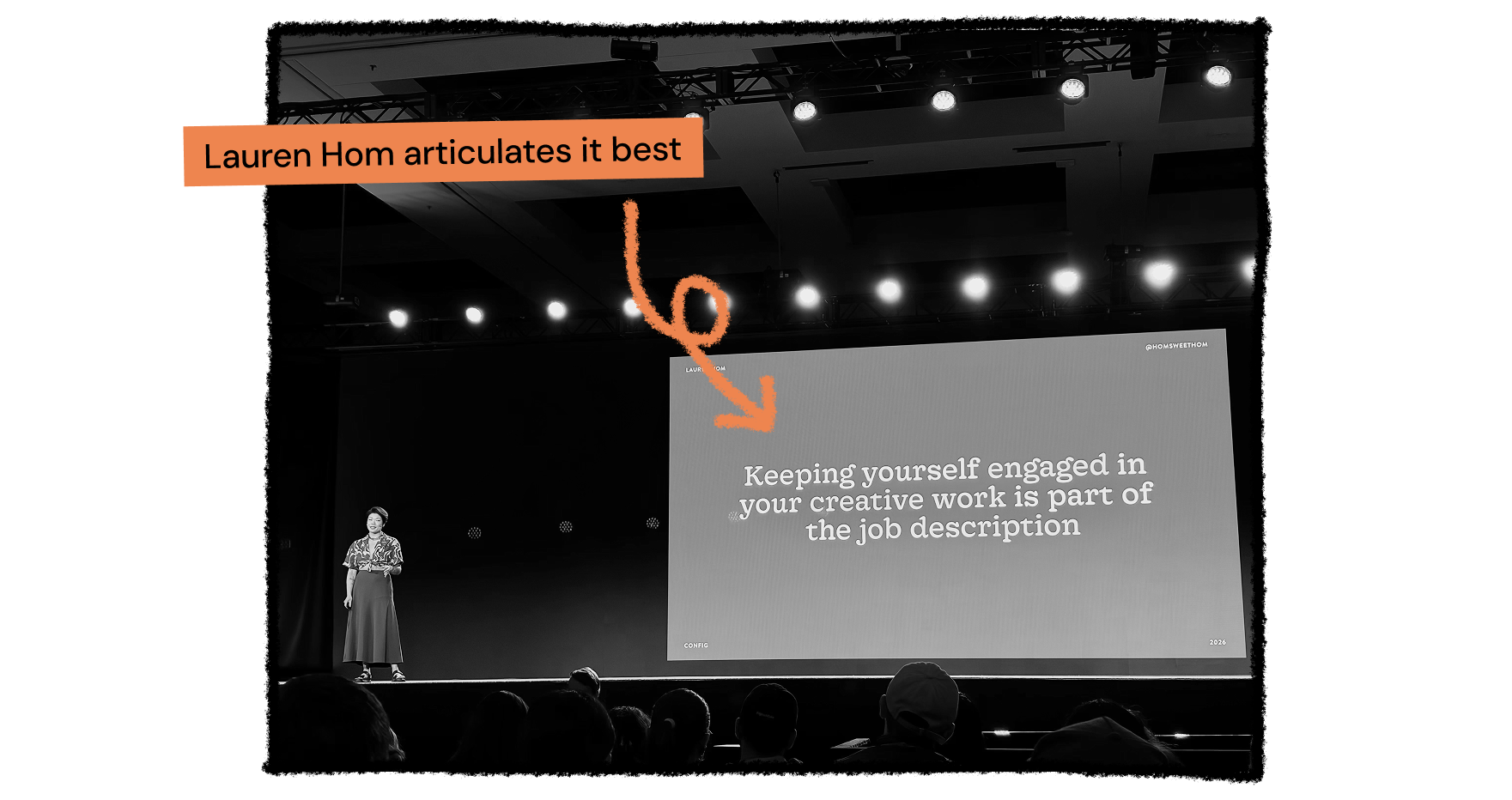
Keeping yourself engaged in your creative work is a part of the job description. Lauren did this by incorporating new mediums, new skills, and new ideas into her portfolio. You’re in charge of keeping your creative spark alive, however messy. Ultimately, you are the creative director of your life. You maintain the joy and humanity in your work.
Honorable mentions
Grant Sanderson (3Blue1Brown), math educator on Youtube, goes into a very technical keynote talk about the intersection of math and art. Not going to lie, the first half of this talk completely went over our heads as Grant went deep into imaginary exponentials and polynomials (I haven't heard these phrases in over a decade, sheesh), but once he brought out the animated M.C. Escher painting, things got really interesting. (Link)
Rose McManus, content designer at Instagram, solves the conundrum of showing usernames vs display names on Instagram. She shares a history of how people have been abstracting names to create hyperreal identities online. The internet is a map that people have adapted to, reflected by our very own social media apps. (Link)
In the closing keynote, a motion designer at Microsoft talks about how good motion is modeled off real life, not settings on a computer. Film animators 1. observe 2. interpret 3. stylize. “Reference gives you the truth, taste decides what to keep, and design decides how far to push it.” He then demos how he literally records real world movements to apply bezier curves to his motion design. (Link)
Differentiation in the age of AI
Because it seems like AI is all about speed nowadays, going into this conference I was personally interested in all the non-AI talks 🙈 Tools will come and go but the foundations of design — craft, taste, and discernment are what distinguish our jobs and keep us motivated. It’s become increasingly clear that craft as a specialty was once reserved for the highly technical design nerds, but now, without it, we’ll lose our edge. Over the weekend, I flipped through the magazine given out to conference attendees, and found some tidbits written by Figma leaders that resonated with me.
Yukhi Yamashita, CPO at Figma, writes about the result of anyone being able to build and build quickly. “The result is a sea of products that feel interchangeable. And when everything works, people choose what feels intentional, what feels cared for. […] Craft is what separates the memorable from the mere functional. It’s active: choosing, not accepting. Revisiting and interrogating each decision, refining, removing, tightening, pushing past the first few versions until the work has a point of view. […] Standing out won’t come from tools or speed, but from how much care you’re willing to put in.”
Loredana Crisan, Chief Design Officer at Figma (and former VP of Design at Messenger), writes “Becoming an expert isn’t just acquiring new skills or techniques; it’s curating a unique way of seeing. This is the most time-intensive part of all — in fact, it never ends […] Taste is built on a unique point of view, and the skill to express it.“ When hiring for taste, she looks for people with discernment who can articulate what’s not working and why, those with empathy for users, and people with creative energy who are always making something — side projects, obsessions, and things they built as a result. To me, these are exactly the traits that take years to develop, and consequently, will keep us employed in a fast-changing field where anyone can build.
Gui Seiz, design director at Figma, encourages designers to evolve craft by using AI as a tutor. Getting set up to code used to be an intimidating task, but has now simplified into just a prompt box. “Curiosity, as much as taste, is going to be the real differentiator. The curious designers will be the winners here.”
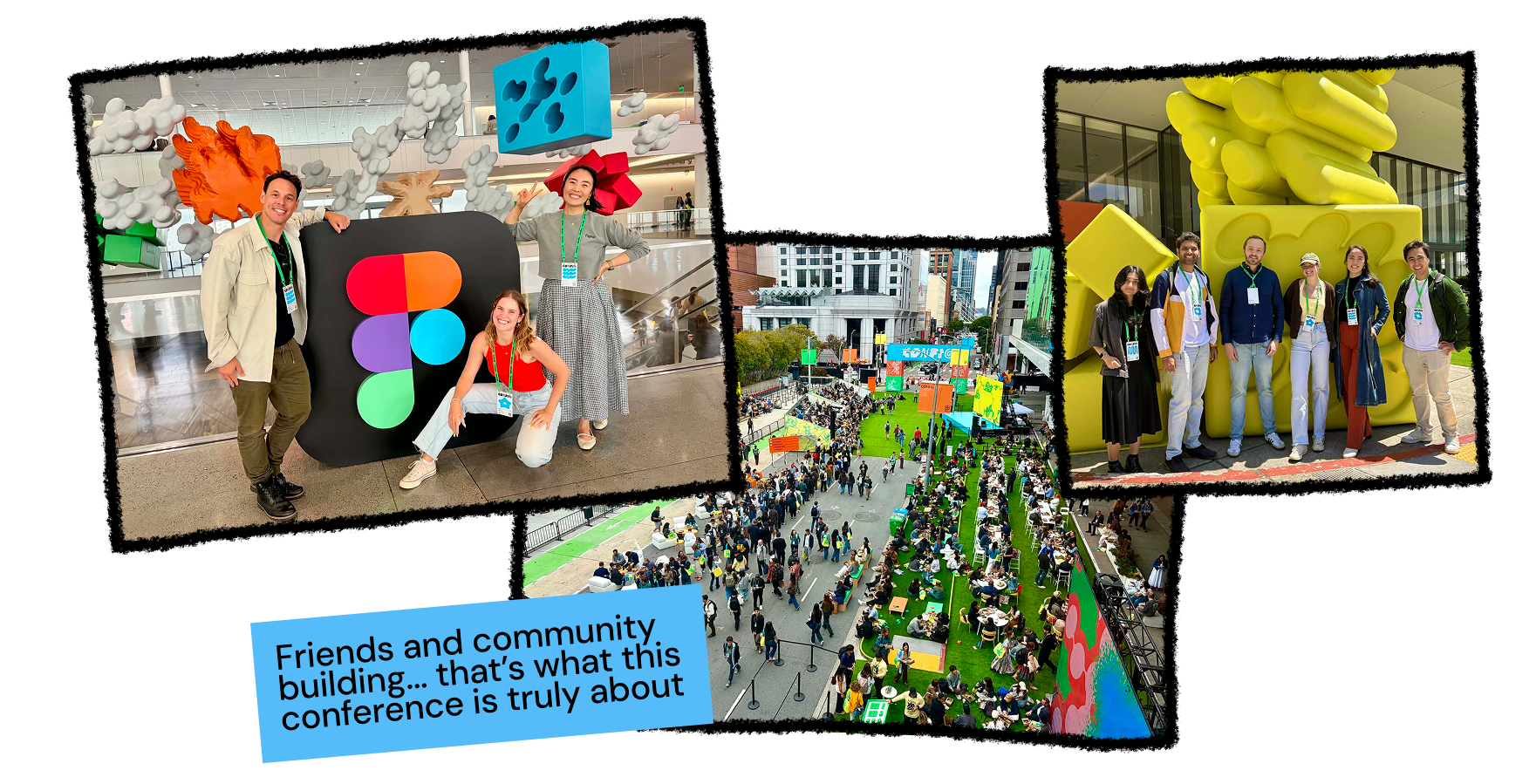
As we head into a future that's moving faster than we can process, attending this conference for the third time reminded me of what really matters: community. Being able to meet up with colleagues old and new and exchange ideas in person speaks volumes about how human interaction is at the heart of what we do. Ultimately humans will always choose humans. Software that is well-designed shows intention and a meaningful point of view, something that only we as unique individuals can offer. People will always gravitate towards things made with heart, intention, and craft in the details.







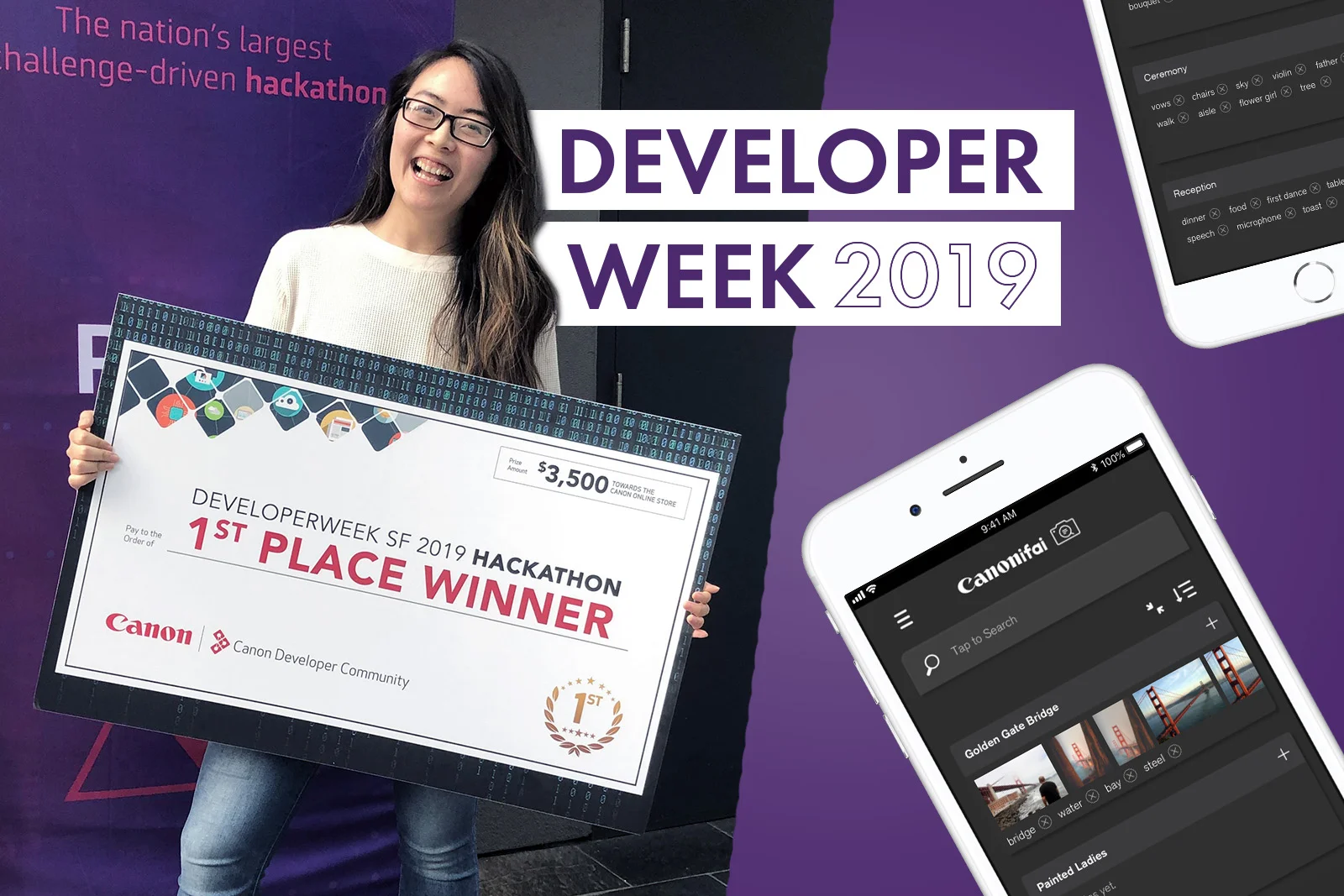




AI this, AI that. Where does the human come in? My thoughts on the future of the design industry coming out of the 2026 Figma Config conference.